
One page profile template: all about me
A free, fillable one page profile template: what people like about you, what matters to you and how best to support you, for every new support worker.
Updated . General information, not advice: check with your plan manager, support coordinator, doctor or therapist about your situation.
The first thing a new support worker needs isn't the medication list or the bin day. It's a sense of who they're supporting: what makes this person laugh, what matters to them, and how to help without getting in the way.
A one page profile puts that on a single sheet. It comes from person-centred planning, and it's one of the simplest, most useful things you can give anyone new. This free template has the classic one page profile on page 1, and a more detailed "all about me" page on page 2 for workers who'll be around regularly.
What's inside
Page 1: all about me, on one page.
- A photo, if the person is happy to share one, and what they like to be called.
- What people like and admire about me: the strengths and qualities people notice, in a sentence or two.
- What's important to me: the people, places, routines and things that matter most.
- How best to support me: what helps, what doesn't, and how to approach things.
- What I do myself, and where I need help: everyday things, ticked as on my own, with prompts or with help.
- Plans that come first: the plans from the doctor, nurse or therapist, and where each one is kept.
Page 2: all about me, in more detail. How I communicate, the things I love and the things that upset me, what a good day looks like, and the people who matter.
How to write a good one page profile
- Write it with the person, in their own words where you can. A parent usually writes it with a child, and a support coordinator or therapist can help too.
- Be specific. "Likes music" tells a worker very little. "Sings along to nursery rhymes, and calms down to quiet piano" tells them a lot.
- Lead with strengths. Starting with what people like and admire sets the tone for how a worker sees the person.
- Keep "how best to support me" practical. Short, clear instructions a new person can follow on their first visit.
- Add a photo, if the person is happy to, so it feels like an introduction rather than a form.
- Update it as things change, and date it, so everyone knows which version they have.
Use first names, and keep it somewhere only your team can see. It's not an NDIS form, and it doesn't replace your NDIS plan or any plan from a doctor or therapist.
Where it fits
A one page profile is the introduction. For the full picture, from medication and mealtimes to routines and goals, use our free NDIS care plan template, which starts with the same "all about me" page. To take a new worker through their first week, use the support worker induction checklist.
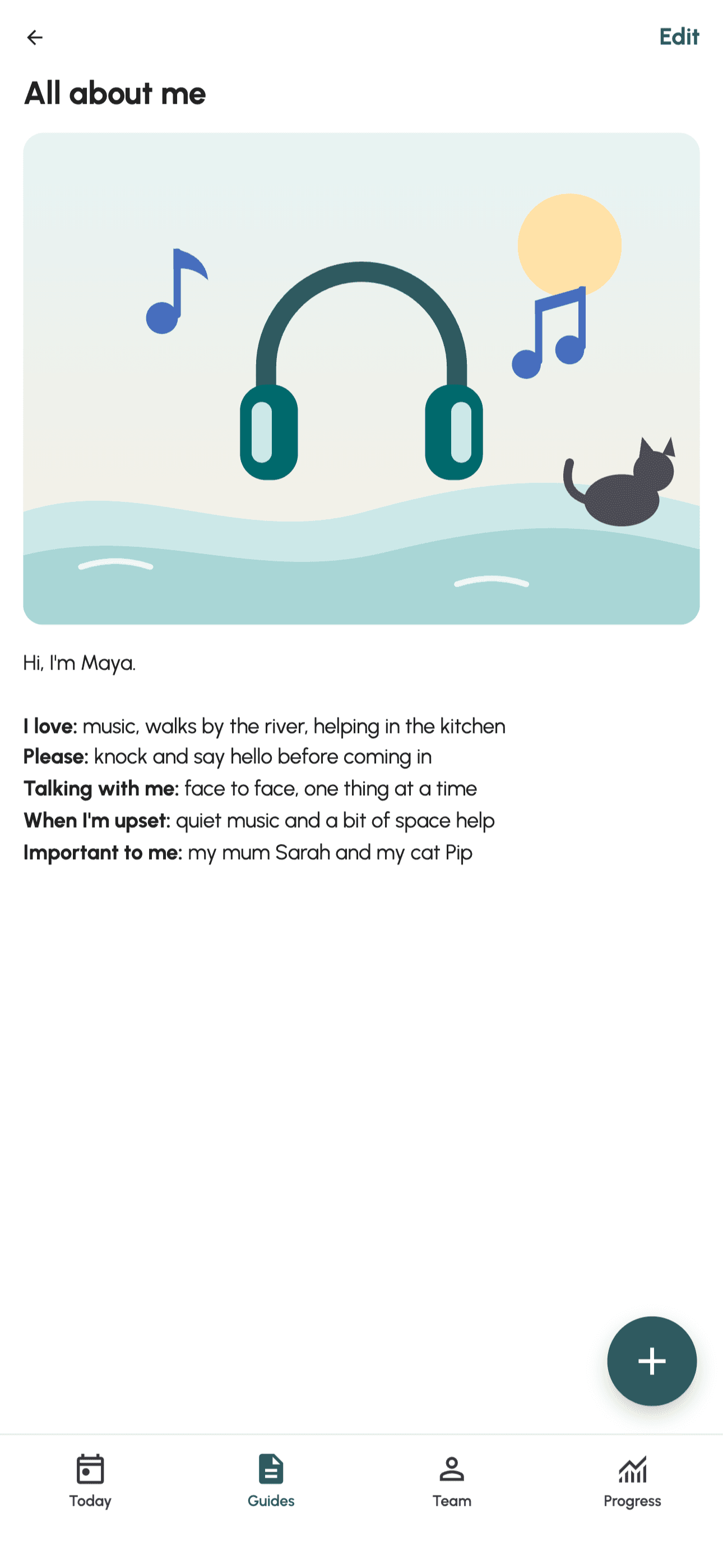
Want this as a live profile?
A printed profile is easy to start with, but it's easy to lose and hard to keep current. In Maslow, your "all about me" page is a care guide every worker sees on their phone, with a photo, and when you update it, everyone sees the new version. We digitise care plans and make them easy to share with support workers. Maslow can be funded from your NDIS plan as Low-Cost Assistive Technology (self-managed and plan-managed participants), if it meets a disability-related need in your plan. See how it works for self-managed teams.
For more on getting a new worker started, read our guide on how to manage your own team of NDIS support workers.