
Care plan template for NDIS families
A free, fillable disability care plan template for families: everything a new support worker needs to know, from medication and mealtimes to routines and goals.
Updated . General information, not advice: check with your plan manager, support coordinator, doctor or therapist about your situation.
Starting with a new support worker is nerve-racking, for you and for them. They want to do a good job, but on their first visit they don't know the routines, the early signs, or where anything is kept. And you're left trying to fit everything that matters into a ten-minute chat at the door.
This free care plan template helps you write it down once. Every worker reads the same plan before they arrive, keeps it to check while they're there, and you stop being the only place the knowledge lives.
The pages aren't a guess. They're based on the care guides, routines and goals families write for their own support workers.
What's inside
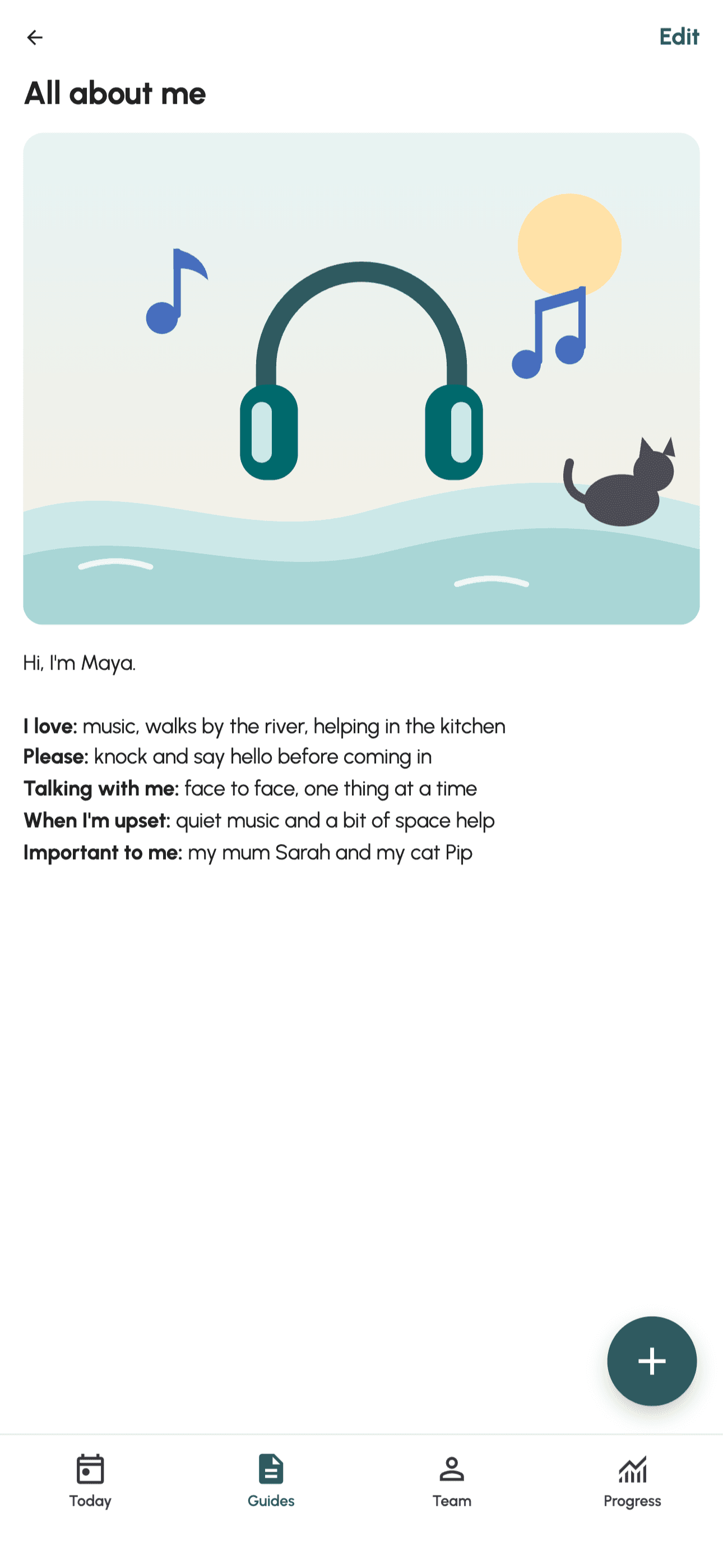
It opens with all about me, on one page: the page a new worker reads before their first visit. It has room for a photo, what people like and admire about the person, what's important to them, how best to support them, what they do themselves and where they need help, and a list of the plans that come first, with where each one is kept.
Every page after it stands on its own, so fill in only the ones that apply:
- Keeping me safe: Important contacts, Medication list, My health plan, What helps when I'm upset, Moving and equipment, and Mealtimes.
- My day: the day in the order it happens, how each part is done, how much help is needed, and which plan comes first.
- Around me: How things work at home, and up to three goals from your NDIS plan, with what support looks like and what to note after each visit.
- Extra pages, if they apply: Personal care (bowel, catheter, transfers, skin and pressure care), and a record of what happened when someone was upset.
What goes on the main pages
Write in plain words, as if you're talking to a kind, capable person who has never met you. Use "I" if the plan is about you, or the person's name if you're writing it for someone you support.
All about me, on one page. What people like and admire about me, what's important to me, and how best to support me. "Face to face, one thing at a time. Tell me early if plans change. If I point at the door, I'd like to go outside."
My day. Each part of the day in order, with how I like it done and how much help I need: on my own, with prompts or with help. "7:45. Breakfast and morning medication. Toast, and tea in the blue cup. With help. Plan: medication chart."
Important contacts. Family, doctor, pharmacy, support coordinator and therapists, and who to call first if something goes wrong. "Call Mum first. If she doesn't answer within 10 minutes, call Dad."
Medication list. What each medicine is for, the dose and time, how I like to take it, and what to do if a dose is missed, as the prescriber or pharmacist advises. "1 tablet at 8am and 8pm, with breakfast and dinner, one at a time with a sip of water. If a dose is missed, follow the chart's missed-dose advice and call Mum."
What helps when I'm upset. The early signs, the things that can set me off, what helps, what not to do, and who to tell. "When I start rocking and covering my ears, it's too loud. Turn the TV off and offer my headphones."
Mealtimes. Foods enjoyed and avoided, allergies, food textures and drink thickness, and the help needed. "Peanut allergy: the EpiPen is in the kitchen drawer. Drinks thickened to mildly thick (see attached plan)."
How things work at home. Appliances, bin day, heating and lights, and where things are kept. "Red bin goes out Tuesday night. The thickener is in the pantry, top shelf, on the left."
Safety first: attach the clinician's plan
Medication, health, behaviour support, moving and equipment, and mealtimes are where a mistake can cause harm. For each of these, the plan written by your doctor, nurse or therapist always comes first, and the template says so on every one of those pages.
- Attach the original plan, or note exactly where to find it, rather than rewriting it in your own words.
- Use the page for the day-to-day details the clinician's plan doesn't cover, such as how someone likes to take their tablets.
- Ask the clinician which parts every worker must know, and put those first.
- Update the page whenever their plan changes, and remove the old version from the home.
How to use it
- Start with the safety pages: medication, health, what helps when upset, moving and equipment, and mealtimes. Fill in the rest over the first few weeks, as questions come up.
- Give it to every new worker before their first visit, and ask them to read it before they arrive. Our support worker induction checklist walks through the first week.
- Write answers into the plan, not just into a text message, so the next worker gets them too.
- Date every page when it changes, and replace the printed copies in the home.
Use first names and roles, and keep the plan somewhere only your team can see. This is not an NDIS form, and it doesn't replace your NDIS plan or any plan from a doctor, nurse or therapist.
Want this as a live plan?
A printed plan starts going out of date the day you print it. Maslow keeps the same pages as care guides and routines on every worker's phone. We digitise care plans and make them easy to share with support workers, so when you change a page, the whole team sees the new version, and their check-ins after each visit are kept in one place. Maslow can be funded from your NDIS plan as Low-Cost Assistive Technology (self-managed and plan-managed participants), if it meets a disability-related need in your plan. See how it works for self-managed teams.
For the bigger picture, from routines and care notes to handovers when a worker leaves, read our guide on how to manage your own team of NDIS support workers. To record each visit, use our free support worker handover template.