
How to manage your own team of NDIS support workers
A practical system for families: what every new support worker needs to know, what to ask for in care notes, and how to build evidence for your plan reassessment.
Updated . General information, not advice: check with your plan manager, support coordinator, doctor or therapist about your situation.
It's 6:45 on a Tuesday morning. The support worker who started last week has just arrived, and you run through the shower routine with them for the third time before you leave for work. At 11 your phone buzzes in a meeting: "Where do we keep the thickener?" At lunch the occupational therapist emails a new way to do transfers, and you wonder whether the afternoon worker will see it before they arrive. By evening you're piecing the day together from a quick chat at the door, three text threads and a half-filled notebook.
If that sounds familiar, you're not doing anything wrong. When you self-manage or plan-manage an NDIS plan, you often become the coordinator, the trainer and the only person who remembers how everything works. This guide sets out a simple system for running your team of support workers, built around one idea: write it down once, so you never have to explain it again.
It follows a support worker through every stage, from before their first visit to the day they move on, and shows what to write down at each one.
Why it feels like a second job
Most families don't struggle because their workers are careless. They struggle because the knowledge lives in one place: your head.
Every new worker has to learn the same things from you, by watching and by asking. Every change, from a new medication to a new way of getting out of bed, has to be passed on person by person. And when someone asks "what happened on Thursday?", you're the one who has to remember.
That makes it a documentation problem, not a people problem. Once the important things are written down in one place that everyone can read, you stop being the go-between for every question. You still lead the team, but the plan does the repeating for you.
The rest of this guide breaks the job into five stages:
- Before the first visit: what every new worker needs to know.
- Every visit: routines that turn the plan into steps.
- After every visit: care notes that tell you what happened.
- Across the year: a record you can bring to your plan reassessment.
- When a worker leaves: a handover that doesn't start from scratch.
Before the first visit: what every new worker needs to know
The riskiest visit is usually the first one. A new worker doesn't yet know the early signs that something is wrong, which foods are unsafe, or how many people a transfer needs. A verbal run-through at the door is easy to forget, and it depends on you remembering to mention everything.
A short written pack fixes that. The worker reads it before they arrive, rereads it when they need to, and every new worker gets the same information.
From the care guides families already write for their workers, nine topics come up again and again:
| Page | What it covers |
|---|---|
| All about me | What I like to be called, how I communicate, what I love, what upsets me, what a good day looks like, and the people who matter |
| Important contacts | Family, doctor and pharmacy, support coordinator, therapists, and who to call first |
| Medication list | What each medicine is for, dose and time, how I like to take it, and what to do if a dose is missed (from the prescriber or pharmacist) |
| My health plan | Conditions, what to watch for, what to do, and when to call for help |
| What helps when I'm upset | Early signs, triggers, what helps, what not to do, and who to tell. If there's a behaviour support plan, attach it and follow it |
| Moving and equipment | Equipment, transfers, how many people are needed, and safety checks |
| Mealtimes | Foods enjoyed and avoided, allergies, textures and drinks, and help needed |
| Morning and bedtime help | Wake and bed times, showering, dressing, toileting and privacy, and settling at night |
| How things work at home | Appliances, bin day, heating and lights, and where things are kept |
You don't have to write all nine before you start. Begin with the pages that keep someone safe: medication, health, moving and equipment, mealtimes, and what helps when they're upset. Fill in the rest over the first few weeks, as questions come up.
For anything clinical, attach the plan your doctor, nurse or therapist wrote rather than rewriting it. Their plan always comes first. Your page simply tells the worker where to find it and what matters most day to day.
Free template: a care plan for support workers. A one-page profile, the safety pages, your day and your goals, as a fillable PDF with prompts for each one. Fill it in on screen or print it, and give it to every new worker.
Every visit: turn the plan into routines
A care guide explains how something is done. A routine tells the worker what to do, and in what order, while they're with you.
Most households settle into a handful of routines:
- Morning: waking, toileting, showering, dressing, breakfast, medication, and getting ready for the day.
- Evening: dinner, medication, a wind-down activity, bathroom, and settling into bed.
- Medication: each dose, at its time, with how it's taken and where it's recorded.
- Around the house: meal prep, laundry, a tidy-up, and the jobs that keep the home running.
Write each routine as short, numbered steps in the order they happen. Keep each step to one action, and link to the care guide when a step needs more detail: "Transfer from bed to wheelchair (see Moving and equipment)."
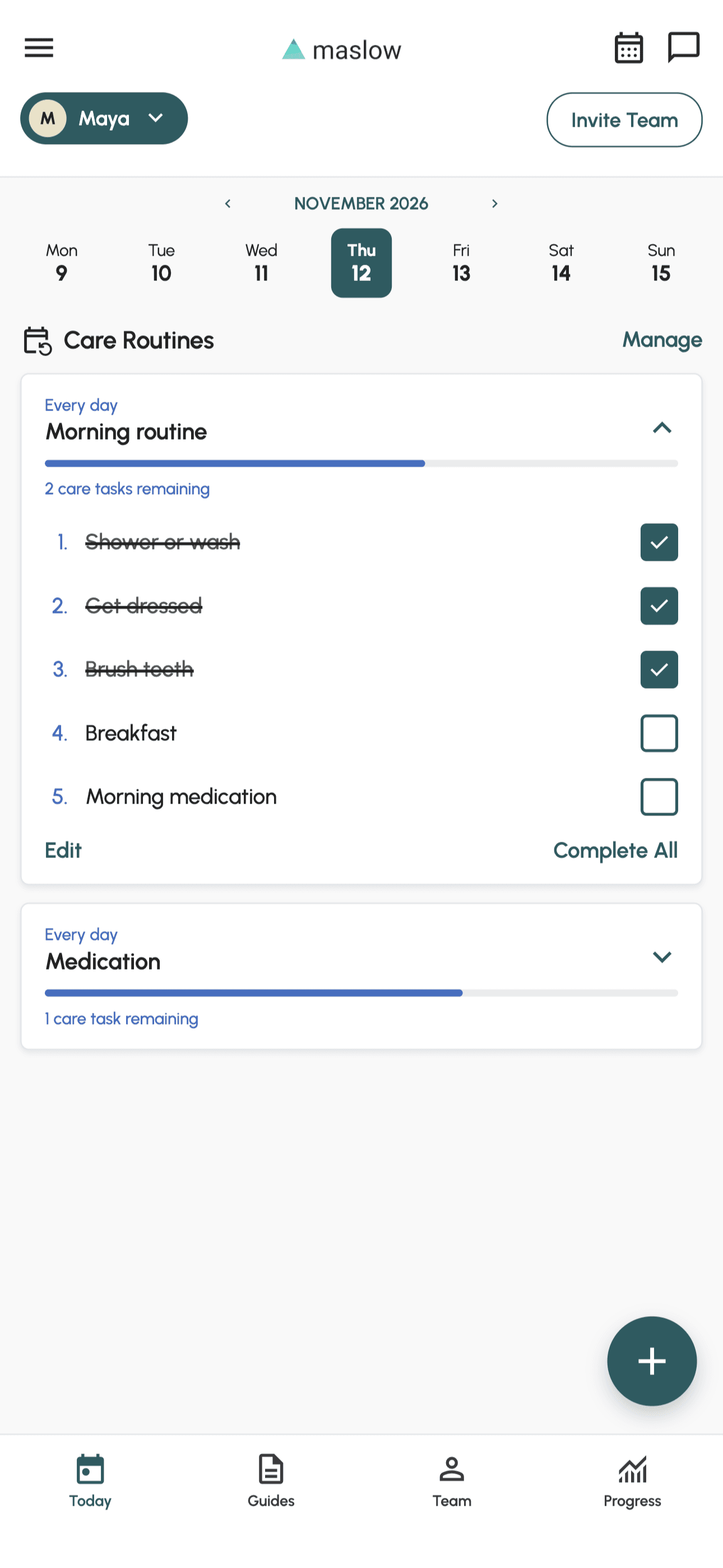
Make the routine easy to find
A routine only helps if the worker sees it when they arrive. Put it where the day starts: a printed copy on the fridge, or a QR code on the fridge that opens the day's routines on the worker's phone. Either way, a worker who arrives early or covers at short notice can start without calling you.
Keep one version
The most common way routines go wrong is that there are several of them. You update the printed copy but not the one you texted last month, or one worker learns the new way and another doesn't. Whatever you use, keep a single current version and tell everyone when it changes.
After every visit: care notes
Care notes answer the question every family asks: "How do I know it's actually being done?" They also give you peace of mind on the days you can't be there, and they can become part of your evidence when your plan reassessment comes around.
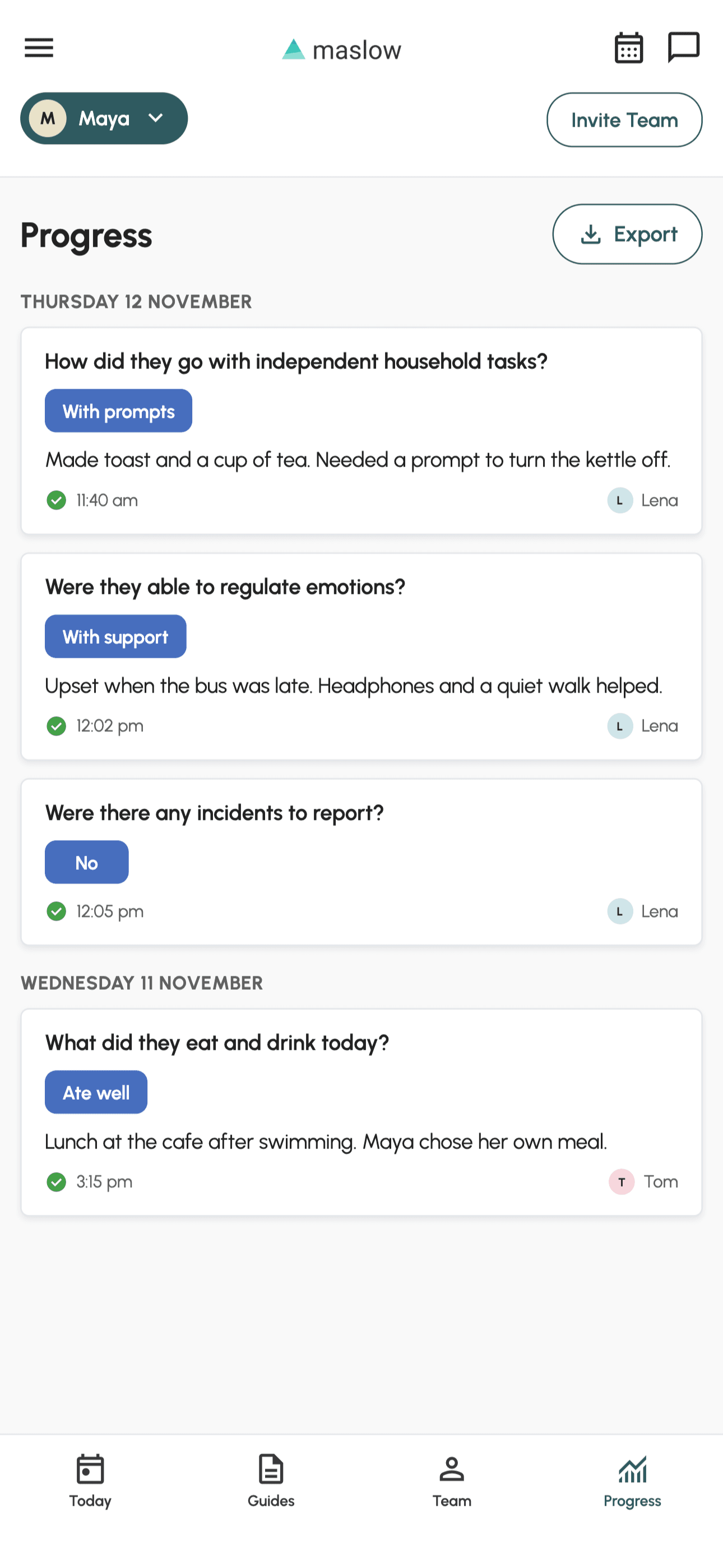
You don't need long reports. A few of the same short questions after every visit work better than a blank page, because they're quick to answer and easy to compare over time:
- How did today go?
- Were there any incidents to report?
- What did they eat and drink?
- How did they go with tasks around the house?
- How was their mood, and what helped?
Ask for the level of help, not just "done"
The most useful habit is to ask how much help was needed, not only whether something happened. Three levels cover most things: on their own, with prompts, or with help.
"Showered: with help" tells you the shower happened. "Showered: with prompts" six months later tells you something has changed. Over a plan year, those small notes add up to a clear picture of what support is needed and how things are going.
Incidents, on the same day
If something goes wrong, ask the worker to write it down before they leave: the date and time, what happened, what they did, and who they told. Notes written on the day are much more reliable than ones pieced together a week later.
For examples of useful notes and how to make them easy for workers, read our guide to support worker progress notes.
Across the year: evidence for your plan reassessment
At a plan reassessment, the NDIS looks at how your supports were used and what changed. If your records live in text messages and memory, preparing for a review means hours of digging, and it's easy to forget the hard weeks that matter most.
If your workers are writing short notes after every visit, most of the work is already done. Set aside ten minutes a month to look back over the notes and jot down anything that stands out: a new skill, a tough patch, an incident, a change in how much help is needed.
When the review arrives, you can bring:
- dated care notes showing which supports were delivered, and how often
- changes in levels of help over time
- incident records written on the day
- reports from your therapists
- a short statement in your own words about what the year has been like
Bringing a record instead of relying on memory makes it easier to answer the planner's questions clearly, especially if you're nervous about saying the wrong thing.
When a worker leaves
Support workers move on. They change jobs, finish studying, move house or cut back their hours. Without a written plan, every departure takes everything they learned with them, and the next worker starts from zero.
With the plan written down, a handover looks very different:
- Ask the departing worker to review the pack. They know what's missing or out of date. Ask them to note anything they do that isn't written down yet.
- Update routines and guides with what they tell you.
- Remove their access to shared documents, group chats, apps and key safes.
- Give the new worker the pack before their first visit, and book a buddy visit with you or an experienced worker if you can.
- Check in after the first week. Ask what was confusing, and fix the pack while it's fresh.
The new worker still needs time to get to know the person they support. But they start from the written plan instead of from scratch, and you don't have to rebuild it from memory.
Tools: paper, shared documents, group chats or an app
There's no single right tool. The best one is whatever your whole team will actually use. Here's an honest comparison of the common options:
| Paper folder | Shared document | Group chat | Care app | |
|---|---|---|---|---|
| Cost | Free | Free | Free | Usually paid |
| Easy to set up | Yes | Yes | Yes | Takes an hour or two |
| Everyone sees the latest version | Only in the home | Yes, if they open it | Gets buried in messages | Yes |
| Routines during the visit | Printed checklist | Possible, but clunky | No | Built in |
| Care notes | Notebook | Possible, but rarely kept up | Easy to send, hard to find later | Built in, dated |
| Plan reassessment evidence | Hours of reading back | Hours of copying | Hours of scrolling | An export |
| Removing a worker who leaves | Nothing to remove | Change sharing settings | Remove from chat | Remove from team |
Paper works well for one or two regular workers who always start their visit in the home. It's free, it never needs charging, and a worker can't miss it on the fridge.
A shared document, such as a Google Doc, is a good next step when workers want to read the plan before they arrive. It gets harder to manage when you're also using it for routines and notes.
A group chat is great for quick questions, but it isn't a plan. Important updates get buried, and nobody wants to scroll through six months of messages before a review.
A care app brings the plan, routines, notes and messages into one place. It's worth considering when several workers share the week, when workers change often, or when you want a dated record without rebuilding it.
Maslow is one of these apps, built for families rather than care businesses. We digitise care plans and make them easy to share with support workers. Your whole team joins free, and the 1-year access plan can be funded from your NDIS plan as Low-Cost Assistive Technology for self-managed and plan-managed participants, if it meets a disability-related need in your plan. You can see how it works for self-managed teams or compare plans.
Maslow doesn't find or hire support workers. To search for workers, try platforms such as Mable, Hireup or Careseekers, then bring the people you hire into your plan.
Where to start this week
You don't need to do all of this at once. Pick one step:
- Write down the one thing you explain most often. For most families, that's the morning routine.
- Ask for three short answers after every visit: how it went, any incidents, and the level of help for one key task.
- Fill in the safety pages of the care plan template: medication, health, moving and equipment, mealtimes, and what helps when they're upset.
Start with the free templates. A care plan for support workers, a handover sheet for every visit, and a checklist for each new worker's first week.