
NDIS plan reassessment: what to expect and the evidence to bring
What happens at an NDIS check-in and plan reassessment, what the planner looks at, and how to build a year of evidence from everyday care notes.
Updated . General information, not advice: check with your plan manager, support coordinator, doctor or therapist about your situation.
If your NDIS plan is coming up for review, it's normal to feel anxious. Many families worry that saying the wrong thing will mean less funding, or that they won't remember the hard weeks when the planner asks.
This guide explains what happens at a check-in and a plan reassessment (what most people still call a plan review), what the NDIA looks at, and how to bring a record instead of relying on memory. It also covers what to do if you have only a few weeks to prepare.
The NDIS is changing how plans work over the next few years, so we date this guide and link to the NDIS's own pages for the details.
What happens at an NDIS check-in and plan reassessment
The check-in meeting
Before your plan ends, usually 2 to 3 months before, the NDIA contacts you for a check-in. It's a conversation about how your plan is going, and it can be in person, by phone or on Microsoft Teams. You can bring a family member, a trusted person, or someone who helps you with your plan, such as your support coordinator.
A check-in doesn't mean your plan has to change. After it, the NDIA might:
- continue your plan for up to 12 months, with the funding indexed, and no plan meeting needed
- vary your plan for a small change
- reassess your plan, which means making a new plan
From February 2027, the NDIS says "plan renewal" replaces plan continuation: a new plan with the same supports, and unspent funds from the old plan won't carry over.
The plan reassessment (plan review)
A reassessment makes a new plan. The NDIA looks at how your current supports were used, the informal and community supports around you, and your progress towards your goals. It also asks you to think about changes you expect over the next few years, and how long you'd like your next plan to run.
Funding can go up, stay the same or go down. The NDIS has also announced that budgets for social, economic and community participation and for improved daily living skills will be reduced over 12 months, for plans created or reassessed from 1 October 2026 and plans renewed from 1 February 2027, and that this change isn't a reviewable decision. That makes it more important to show clearly what support is needed, and why.
For the NDIA's own explanation, see its page on how to prepare for a plan reassessment.
What the NDIA looks at
The NDIS says evidence might include assessments or reports from your treating health professionals, your therapists, or your support workers, to show how your supports are helping you work towards your goals.
In practice, the most useful evidence answers four questions:
- What help is needed, day to day? Not on a good day, but across real weeks, including the hard ones.
- How were the supports in your plan used? Which ones, how often, and what they made possible.
- What has changed? New skills, new difficulties, changes at home, school or work.
- How does each support connect to a goal? Planners think in goals, so link what you're asking for to the goals in your plan.
Evidence that carries weight
Dated, specific records are much more convincing than general descriptions. "She needs a lot of help in the mornings" is a memory. "Showered with help on 26 of 30 mornings in September" is a record.
The evidence that helps most:
- Dated care notes from your support workers, showing the support delivered and how often.
- Levels of help over time, such as "with help" in March moving to "with prompts" in September, or the other way.
- Incident records written on the day, not pieced together later.
- Reports from your therapists, such as your OT, speech pathologist, physio or behaviour support practitioner.
- A short statement in your own words about what the year has been like, including the impact on your family.
Your support workers are named by the NDIS as a source of evidence, which is a good reason to ask them for short notes after every visit. Our guide to support worker progress notes covers what to ask for.
Building the record through the year
The easiest reassessment is the one you prepare for a little at a time.
- Ask for notes after every visit. A few short questions, answered the same way each time, including the level of help needed for key tasks.
- Take ten minutes a month to read back over the notes and jot down anything that stands out: a new skill, a hard patch, an incident, a change in the help needed.
- Keep therapist reports together as they arrive, rather than hunting for them later.
- Note big changes when they happen, such as a hospital stay, a move, a new school or a carer becoming unwell.
Our free support worker handover template gives workers the same questions to answer after every visit, with the level of help built in.
Only weeks to go? Catching up
If your check-in is close and you don't have a year of notes, you can still bring a clear picture.
- Ask your therapists for up-to-date reports now, as they can take a few weeks.
- Write down a typical week, hour by hour, including the help needed with each part of the day, and a hard day as well as a good one.
- Ask your support workers to write a short statement about the support they provide and what they've noticed changing.
- Start care notes today. Even a few weeks of dated notes show the pattern better than memory alone.
- List your goals from your current plan, and next to each, what has happened and what support you'll need.
In the meeting
- Bring your record, and someone who knows your situation if you'd like support.
- Talk about real days, including the hard ones. If you only describe the good days, the plan may not cover the others.
- Link each request to a goal. "Support to cook with prompts, so she can live more independently" is clearer than "more hours".
- It's fine to pause. If a question throws you, say you'd like to check your notes, or that you'll send more information after the meeting.
You can send evidence through the NDIS service hub, by post or in person, so nothing has to be handed over on the day.
If your situation changes before the reassessment date
If something significant and ongoing changes, such as your support needs, where you live, or the informal support around you, you can ask for a reassessment early. Since 27 August 2026, only the participant, their plan nominee or child representative can ask, using the NDIA's plan reassessment request form, and the evidence must be dated within 4 months of the request and after your current plan was approved. Smaller or short-term changes can go through a plan variation instead. The NDIA's page on what a plan reassessment is has the details.
After the reassessment
When your new plan arrives, check it carefully: the budgets, the goals and how long it runs. If you disagree with a decision:
- Ask the NDIA to explain it. Sometimes a conversation sorts it out.
- Ask for an internal review within 3 months of receiving the decision. The NDIA aims to finish internal reviews within 60 days. Not every decision can be reviewed: the NDIS says the 2026 budget reductions aren't a reviewable decision. See how to request a review of a decision.
- Apply to the Administrative Review Tribunal within 28 days of the internal review decision, if you still disagree. See the Tribunal's NDIS page.
Free help is available. The NDIS Appeals Program funds advocates, and sometimes legal help, once you've had an internal review.
How Maslow helps
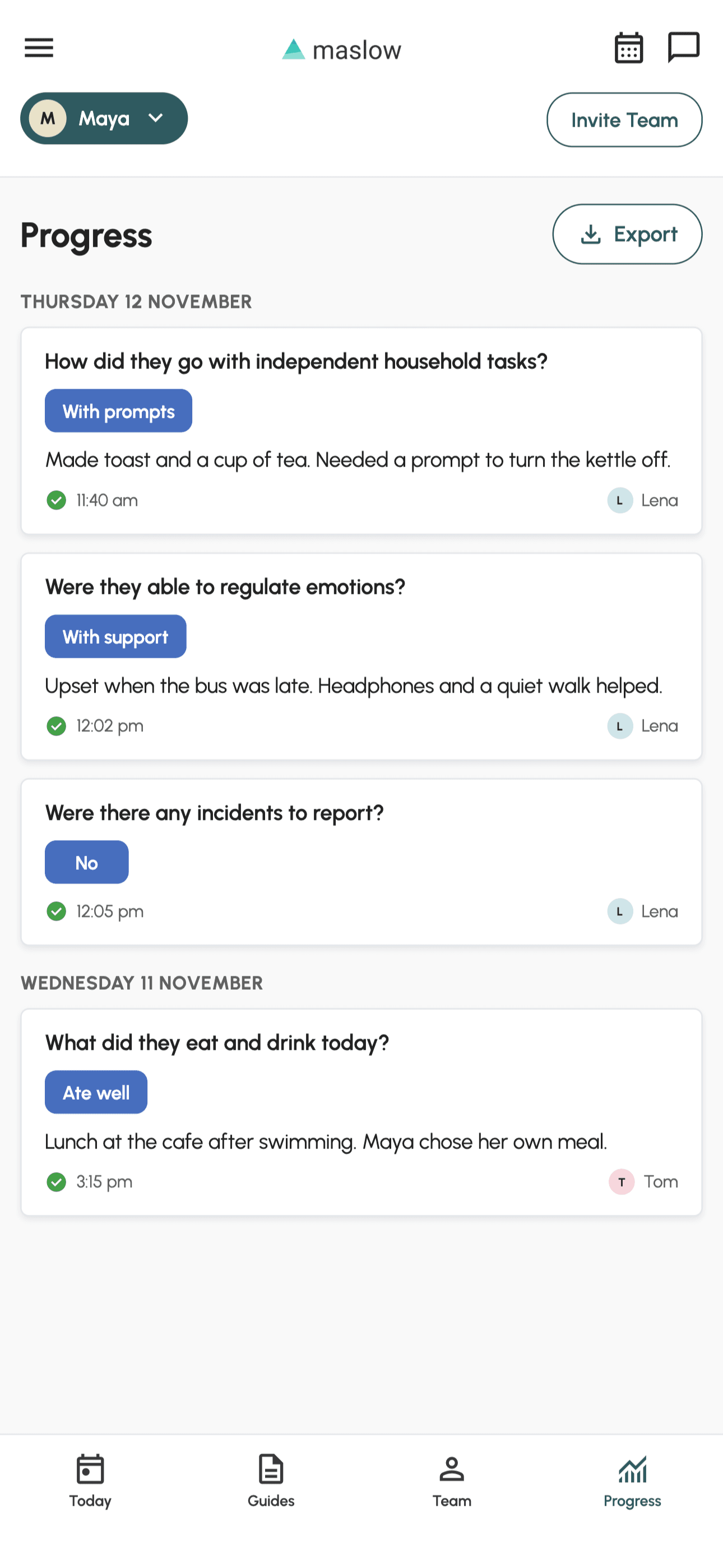
Maslow doesn't manage your plan or your budget; you do. What it does is keep the everyday record for you. We digitise care plans and make them easy to share with support workers, and the care notes your team writes after each visit are dated, show who recorded them, and can be exported when your reassessment comes around. Instead of piecing together a year from text messages, you can bring a dated record of what your team wrote after each visit, and how things changed.
See how Maslow works for self-managed teams, or read our guide on how to manage your own team of NDIS support workers.